THE ABCS (ESPECIALLY CS) AND BEYOND
It’s a special day when you select your engagement ring. But the endless options, from stones to shapes to settings, may overwhelm you at first. Fortunately, Guy Spaulding, who is our head GIA Graduate Gemologist, has much knowledge to impart to guide you toward making the ideal choice.
The color scale for non-colored diamonds runs from D (the highest) to Z (the lowest), with most buyers often preferring something in the higher ranges. “People need to know that D isn’t pure white; it means it’s colorless, which is also true about E and F,” he explains. “The difference is the degree of transparency in the stone. But what’s most important is the reflection of light the stone gives back, which many people equate with how sparkly the diamond is.”
Spaulding points out that the wearer’s skin tone is a very relevant, and often overlooked, point to consider. “There really is a relative contrast. So you can go with a warmer-colored diamond if you have darker/olive skin. On the right person, a K can look just as good as a D.”
The clarity scale from the GIA runs from I3 (which has obvious inclusions to SI (inclusions are only visible to a skilled grader with a 10x microscope) to VS-VVS and finally FL (no visible occlusions even to a skilled grader with a 10x microscope). But Spaulding warns that these grades aren’t as universal as one might expect, and can depend on the lab—much like your school grades depended on your teacher. “Higher clarity doesn’t always make stone more beautiful, but it does make it more valuable,” admits Spaulding. “And the fact is, some people care about the investment value of the diamond they’re buying… but not everyone does.”
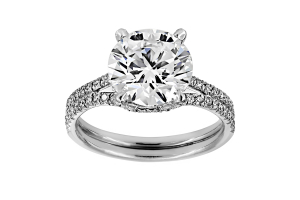
Cut, or shape, notes Spaulding, is one of the most personal choices a buyer can make. “Round diamonds continue to be the most popular, but your body type should help dictate your purchase,” he says. “Longer fingers call for a longer shape such as a Marquis, Oval, Emerald, Radiant or even a Pear cut, while shorter hands are better for round or square diamonds. Like shoes, sometimes you have to try them all on to find what looks best on you.”
Finally, there’s the carat factor. Carat is the unit of measurement used to determine a diamonds weight. While lots of people get caught up in a “bigger is better” mentality, Spaulding cautions that “any diamond over one carat is actually rare. Again, size is a personal decision. And the bottom line remains that every diamond, no matter its size, shape, clarity or color, is as unique as the person who is wearing it.”